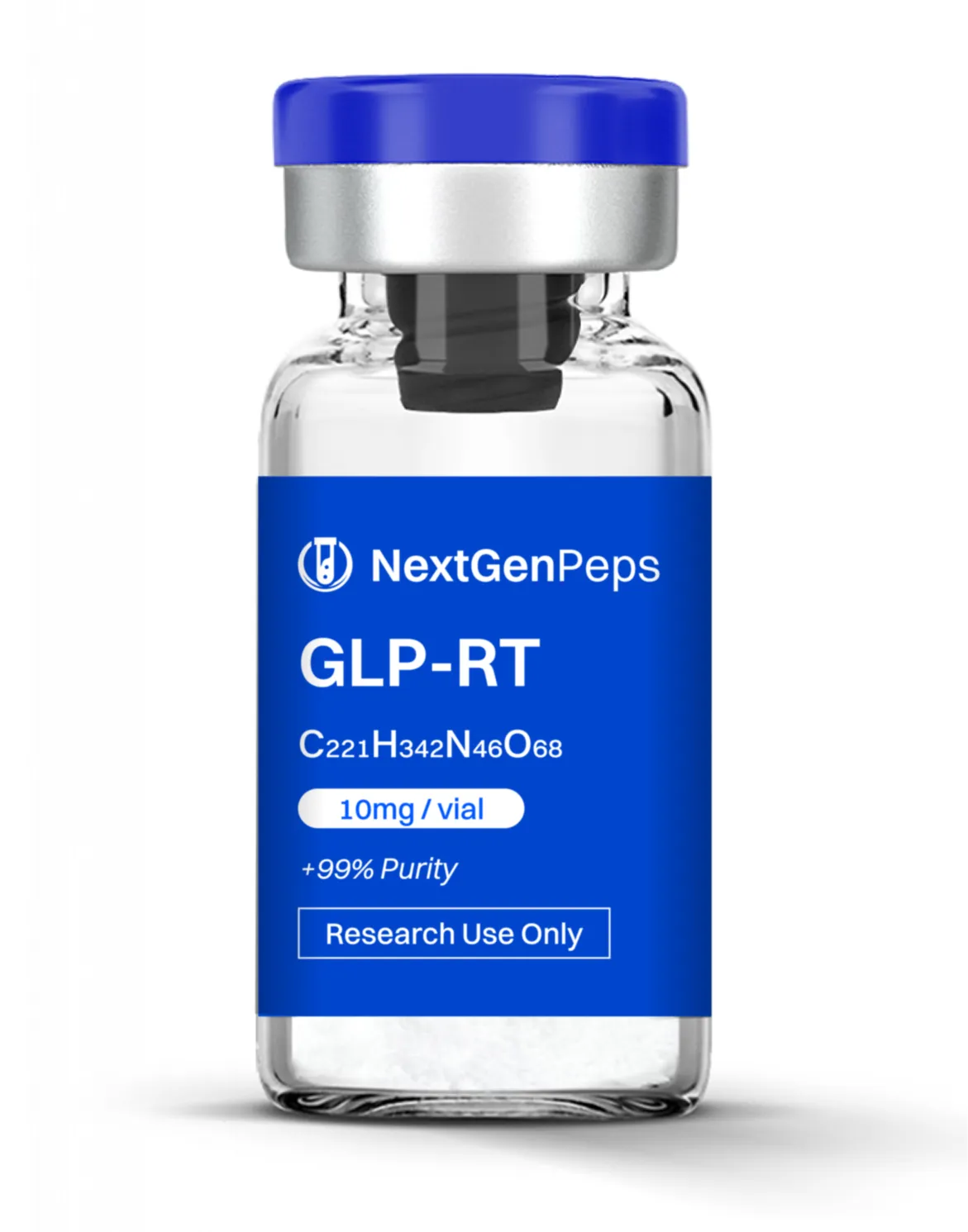
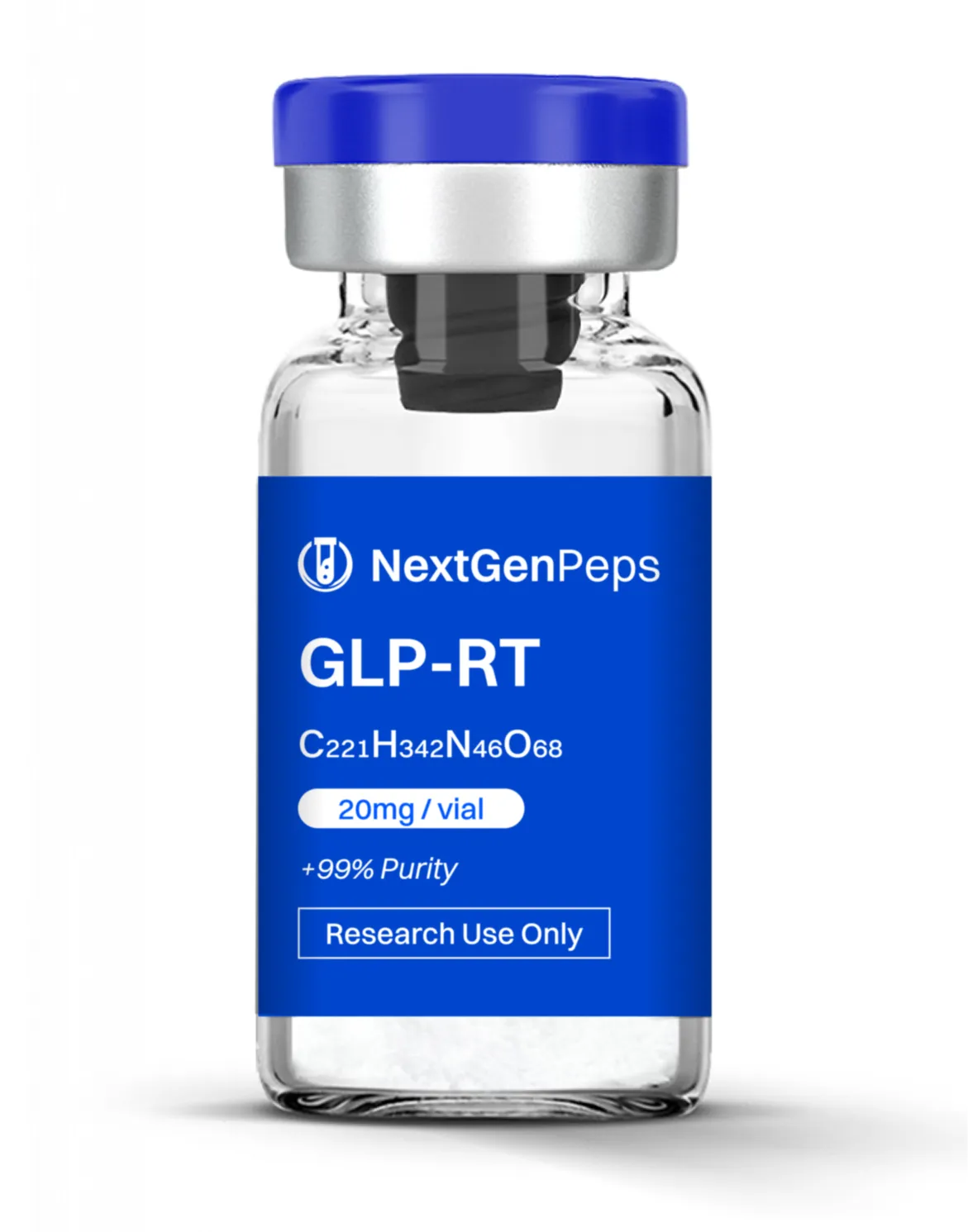
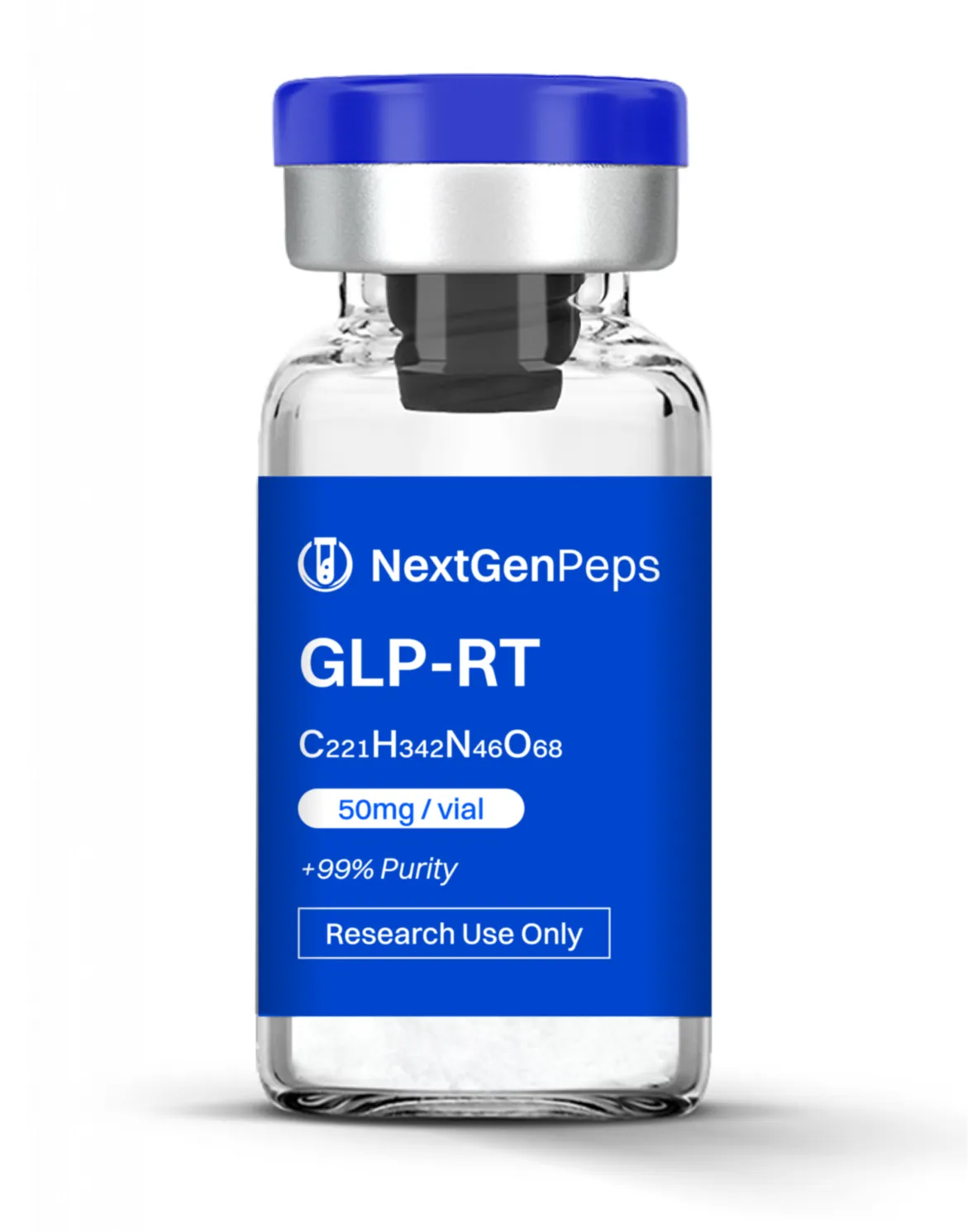




How is GLP-RT packaged?
GLP-RT is supplied in the product format and quantity shown for the selected variant. Please inspect the sealed package when it arrives and contact support promptly if the package or labeling appears damaged.
In stock
GLP-RT 10mg / Vial for laboratory research. View available variants, pricing, and availability. Batch-specific testing documentation is available.
GLP-RT Overview
GLP-RT (LY3437943) is a high-purity, research-grade synthetic peptide developed as a triple receptor agonist that simultaneously targets GLP‐1, GIP, and glucagon receptors. Its single, continuous helical conformation and long plasma half‐life make it a central tool for modeling intensive incretin/glucagon‐based metabolic interventions.
Molecular Composition and Mechanistic Profile
GLP-RT adopts a single continuous helix where:
The N‐terminal segment engages the receptor transmembrane domain.
The C‐terminal segment interacts with extracellular regions of GLP‐1 and GIP
receptors.
It exhibits the following potencies (EC50):
GIP receptor: 0.0643 nM
GLP‐1 receptor: 0.775 nM
Glucagon receptor: 5.79 nM
The peptide shows a terminal half‐life of ~6 days, undergoes primarily hepatic metabolism, and shows little interaction with cytochrome P450 enzymes.
Integrated Research Applications
GLP-RT is used to study intensive metabolic modulation across several domains:
Obesity and weight loss: Phase 2 trials in obesity show robust, dose‐dependent reductions in body weight, reflecting combined appetite suppression, delayed gastric emptying, and increased energy expenditure.
Glycemic control and diabetes: Triple agonism allows investigation of potent HbA1c lowering, fasting and post‐prandial glucose improvements, and β‐cell function compared with single or dual incretin agents.
Metabolic liver disease: Randomized trials in metabolic dysfunction–associated steatotic liver disease (MASLD/MASH) evaluate its impact on liver fat content, inflammation, and fibrosis markers.
Kidney and cardio‐metabolic protection: Comparative animal studies against liraglutide and tirzepatide explore effects on diabetic kidney disease and broader cardio‐renal endpoints.
Ligand–receptor structural work clarifies how GLP-RT simultaneously engages GLP‐1R, GIPR, and GCGR to create a distinctive metabolic signature, including reductions in gastric emptying rate, food intake, and body‐weight set‐point.
Analytical Validation, Formulation, and Storage
HPLC purity: 99.4–99.5%.
Source: Fully synthetic; supplied as lyophilized powder.
Counterion: Typically supplied as a sodium salt; TFA counterion from HPLC
purification may be present and can contribute to total mass and influence solubility.
Storage and handling guidelines:
Delivered lyophilized; store at or below −20 °C to maintain long‐term stability.
Reconstitute with appropriate sterile buffer for in vitro or in vivo experimental work, following standard peptide‐handling SOPs. Residual TFA:
TFA salt can account for up to ~20% of total mass; peptide content is generally ≥80% of the net weight.
TFA typically improves aqueous solubility and does not interfere with standard in vitro assays, though highly sensitive assays should consider its presence.
NextGenPeps supplies GLP-RT exclusively for laboratory research in vitro or in approved animal models. This compound is not approved for human use and is not marketed as a drug, supplement, or diagnostic agent.
99.79%
HPLC purity · Tested by Bioregen
GLP-RT is supplied in the product format and quantity shown for the selected variant. Please inspect the sealed package when it arrives and contact support promptly if the package or labeling appears damaged.
Orders are shipped within the United States via USPS. Transit times are typically 3–7 business days, depending on destination and carrier conditions. Tracking information is provided when available.
Storage requirements are product-specific. Keep GLP-RT in its original labeled container and follow the product documentation or manufacturer instructions supplied with the order. Contact support if the applicable storage guidance is not available.
Due to the nature of research materials, NextGenPeps orders are final and are not eligible for refunds, returns, or exchanges. Review the shipping and reship policies before ordering.
No. NextGenPeps materials are supplied strictly for laboratory research and development use and are not intended for human or animal consumption, clinical use, diagnostic use, cosmetic use, or dietary use.
It is a triple agonist at GLP‐1, GIP, and glucagon receptors, with highest potency at GIPR, intermediate at GLP‐1R, and lower potency at GCGR.
The peptide has an approximate half‐life of six days, enabling once‐weekly or less frequent dosing regimens in research protocols.
GLP-RT slows gastric emptying, reduces food intake, and significantly decreases body weight and glycated hemoglobin (HbA1c) in experimental and clinical settings, while also improving liver and cardio‐metabolic markers in targeted trials.
It is supplied as lyophilized powder (synthetic peptide, ~99.4–99.5% purity), stored at or below −20 °C, reconstituted with lab‐grade solvent before use, and handled under standard peptide research protocols.
✓ test purity
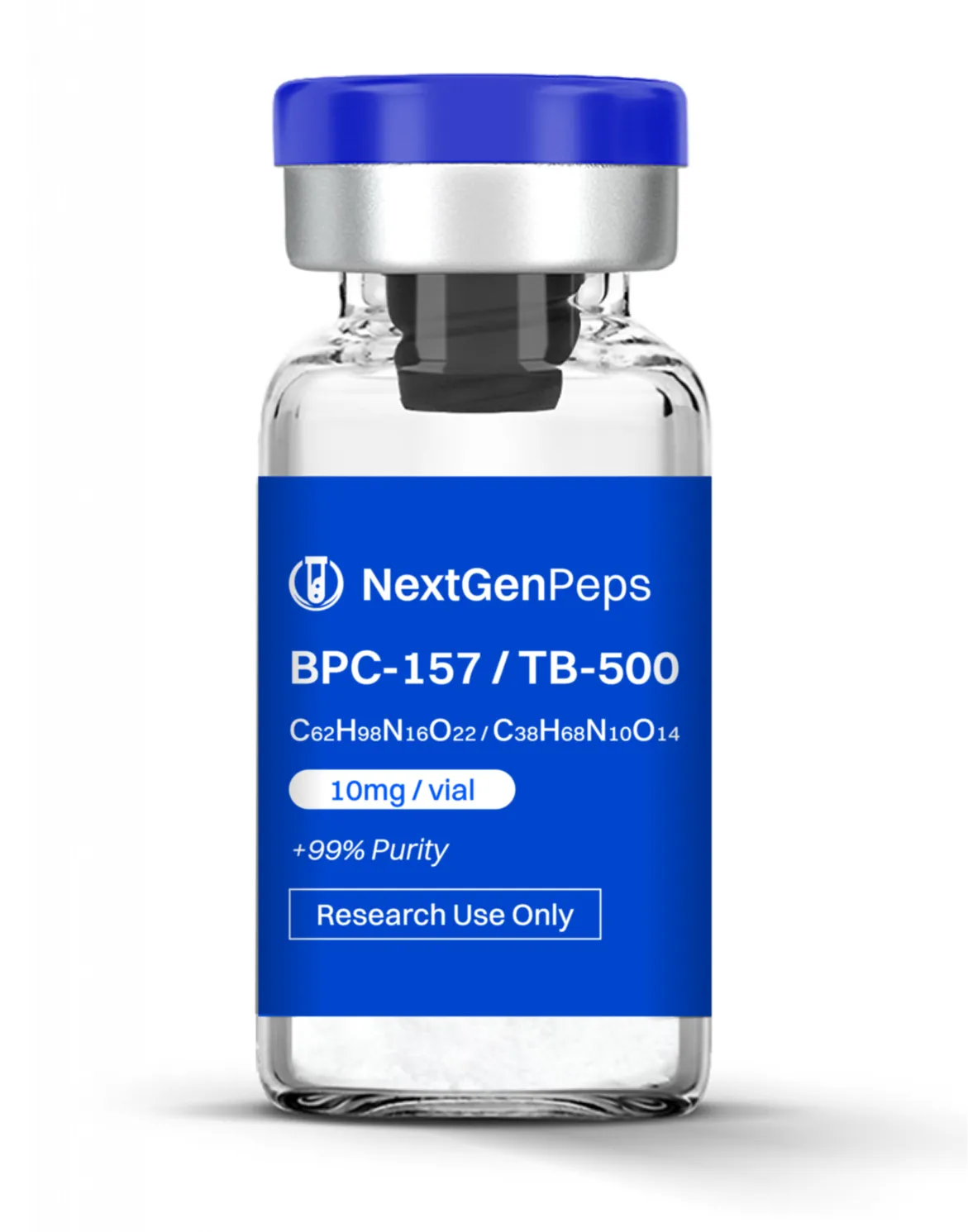
✓ 99.11% / 99.50% purity
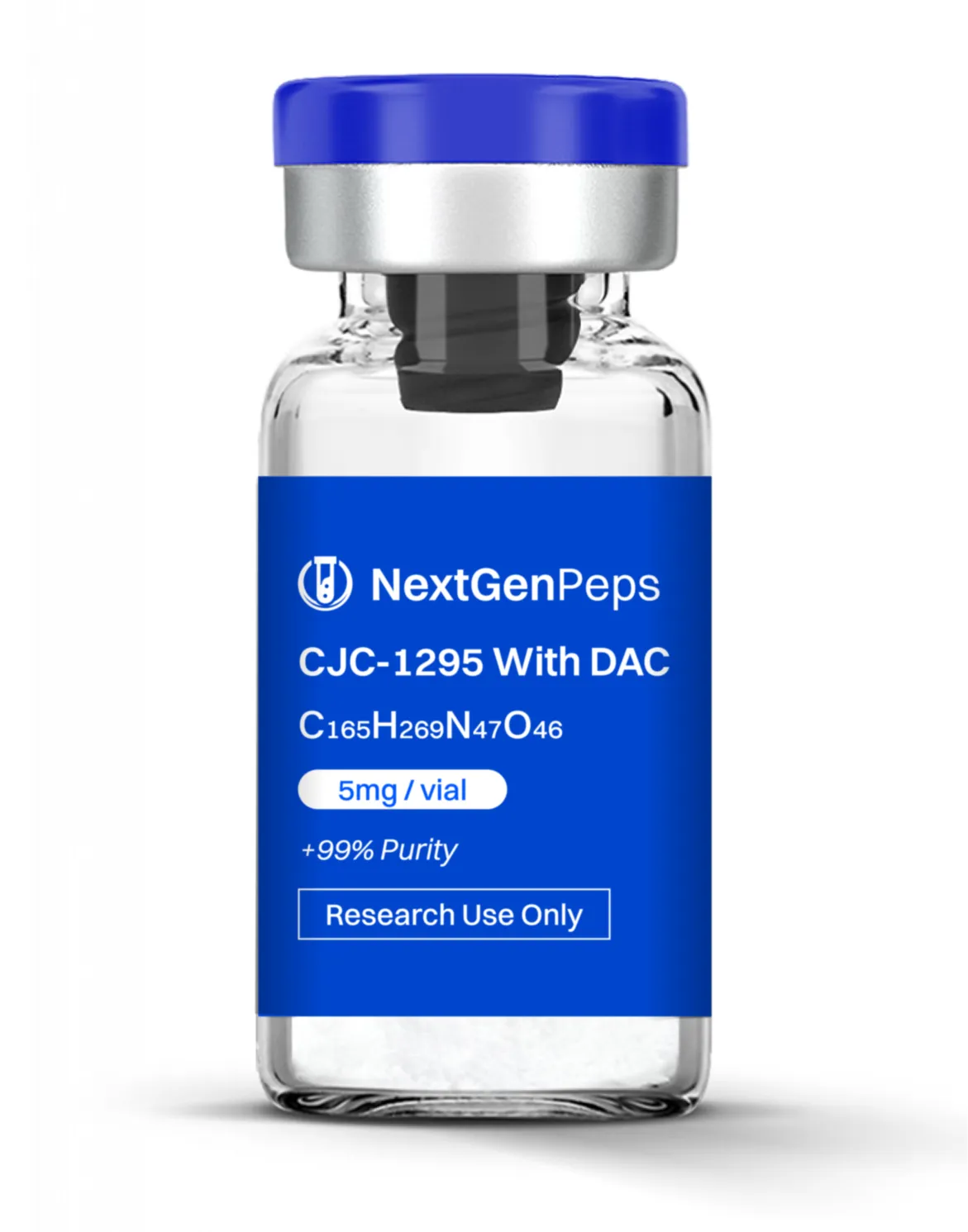
✓ 99.35% purity
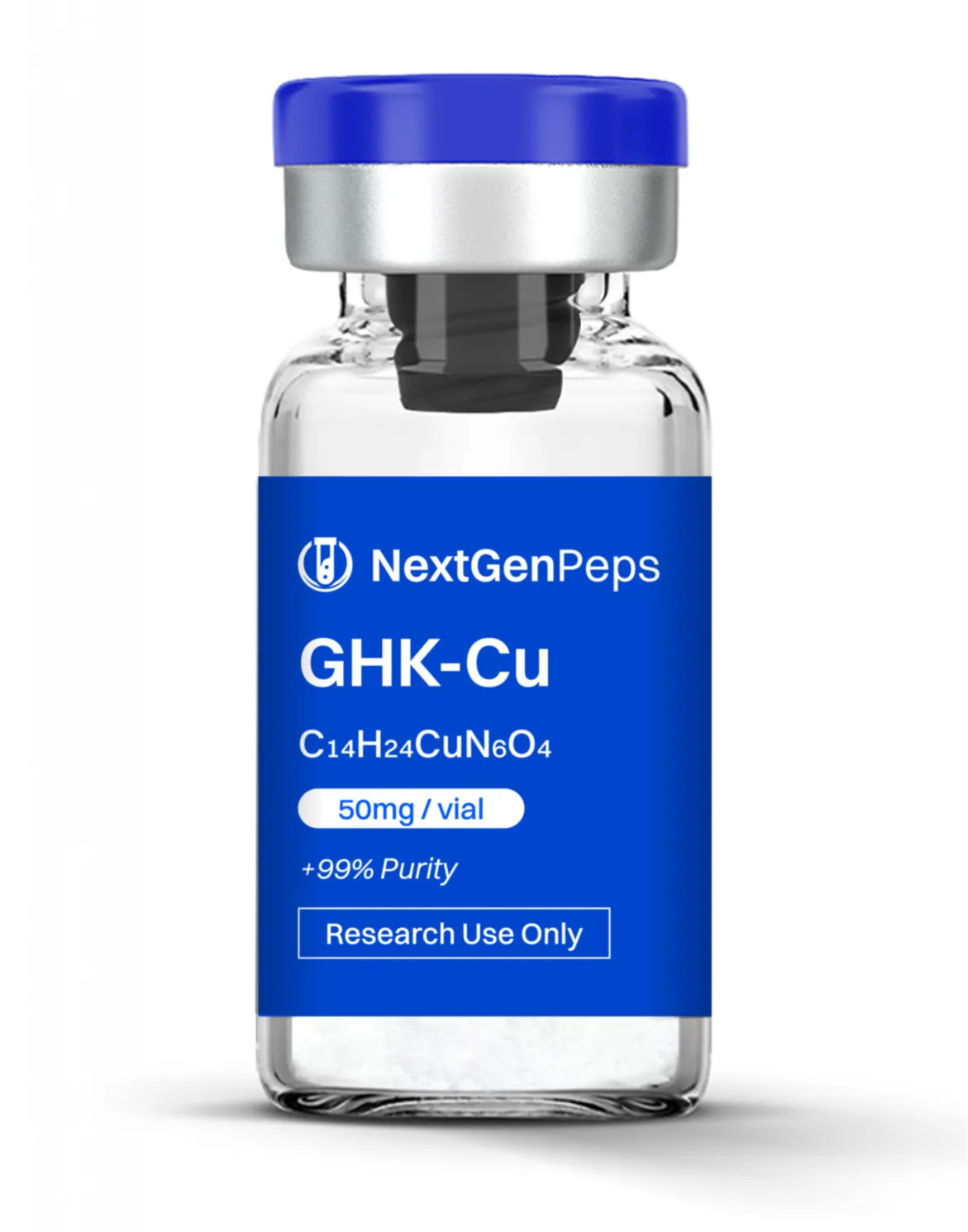
✓ 99.75% purity
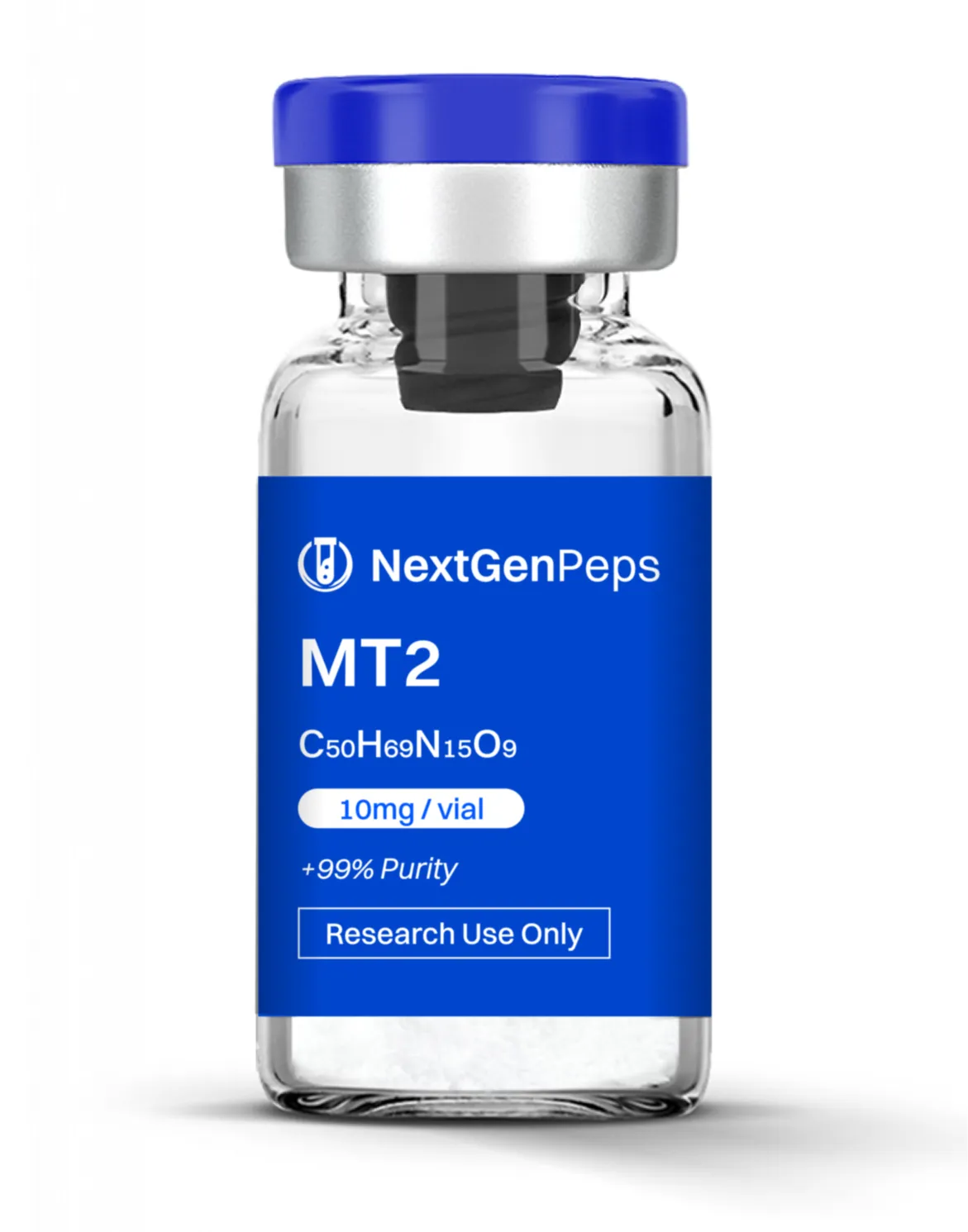
✓ 99.78% purity