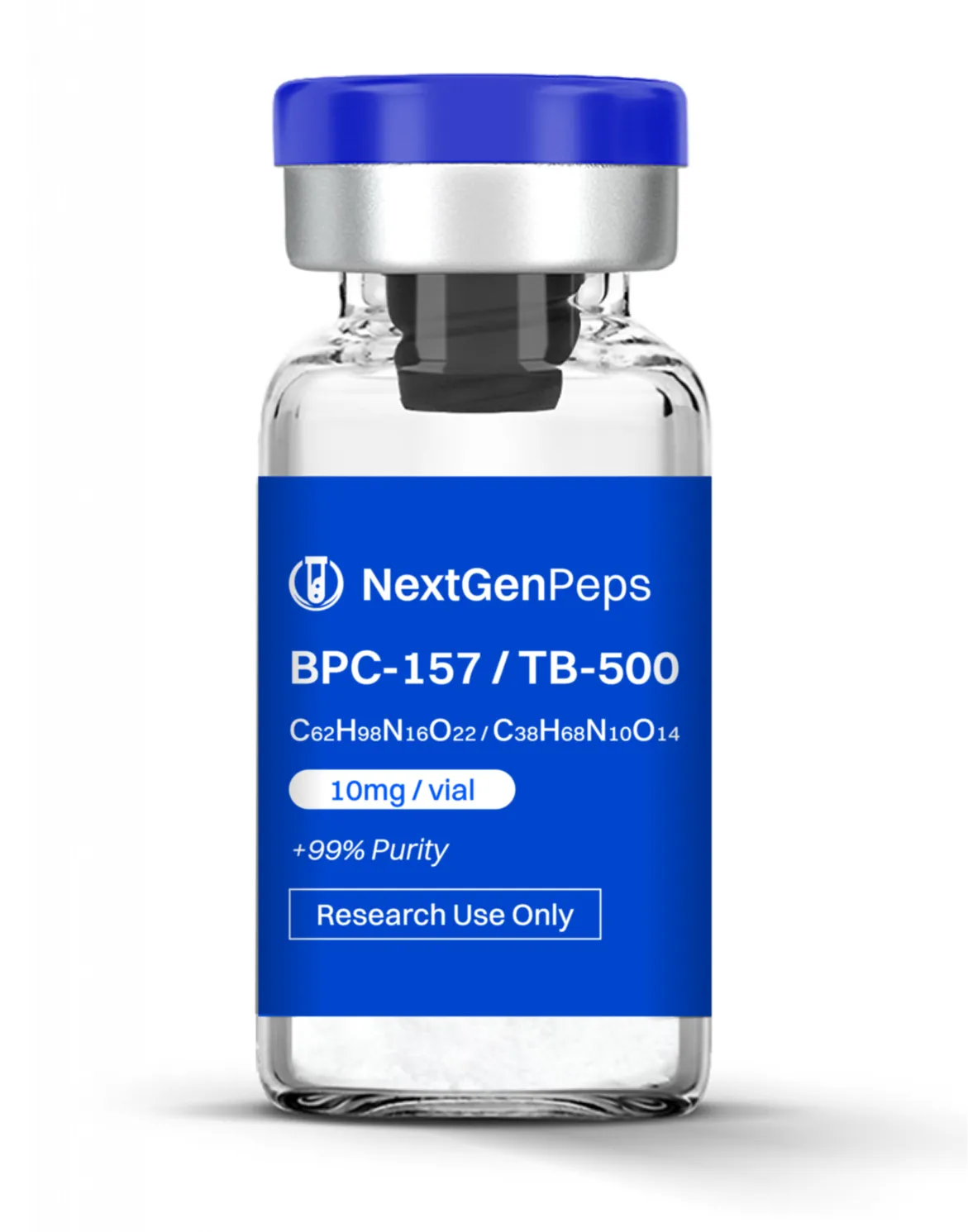
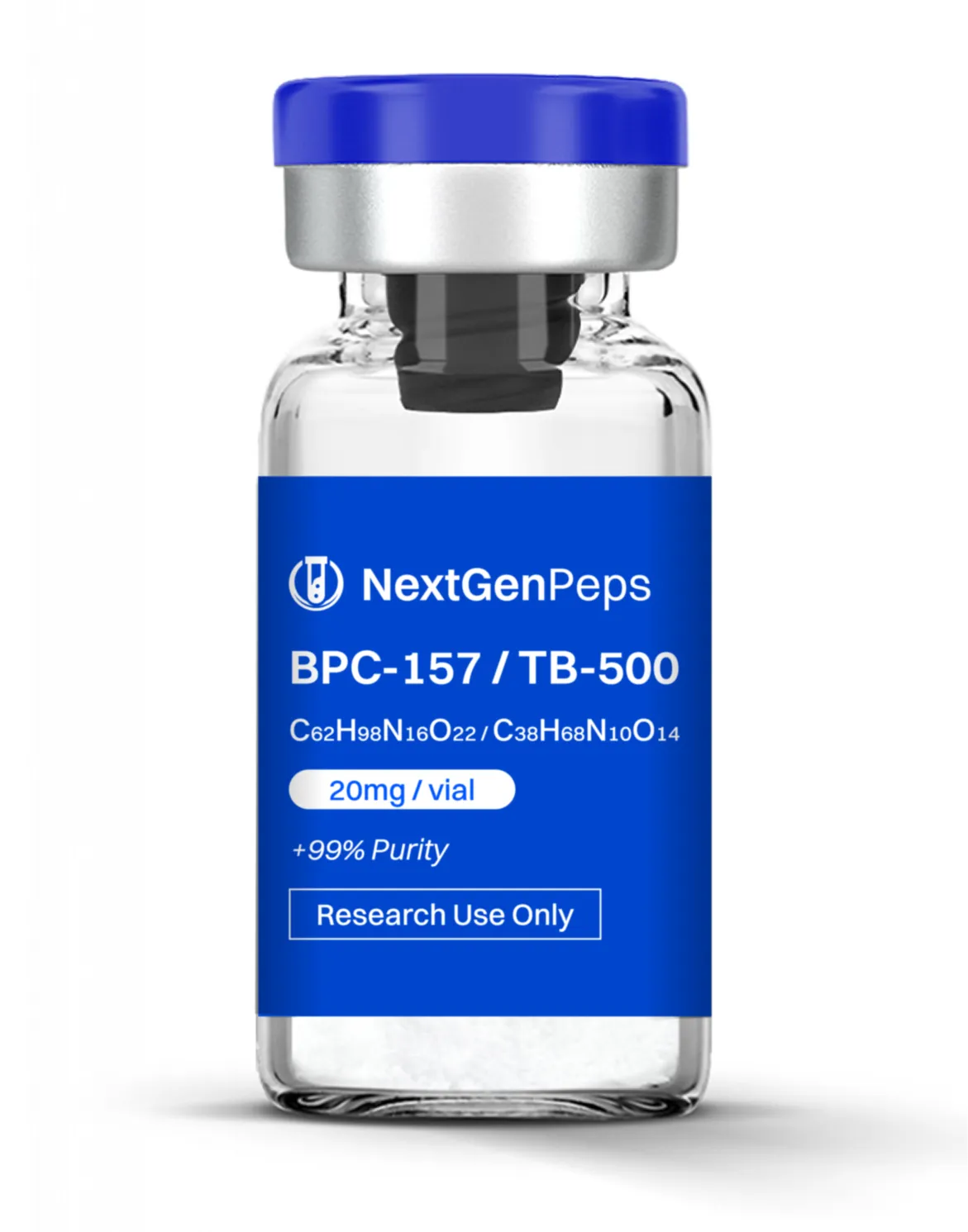
BPC-157 + TB500 (Thymosin Beta-4 Fragment)
The BPC-157 + TB500 composite is a high-purity, research-grade peptide formulation engineered for advanced investigation into multimodal tissue repair and cellular signaling mechanisms. This blend unites three structurally distinct yet functionally complementary peptides each extensively characterized in preclinical systems for their influence on inflammation dynamics, angiogenesis, cytoprotection, oxidative balance, and gene-level regulation of regeneration pathways.
Molecular Composition and Mechanistic Diversity
BPC-157 (Body Protection Compound 157): A synthetic 15-amino acid peptide derivative of gastric protein sequences, known for its exceptional stability across pH gradients and enzymatic conditions. Studies demonstrate rapid systemic uptake and targeted activity at endothelial and fibroblastic levels, implicating it in nitric oxide modulation, collagen synthesis, and vascular repair.
TB500 (Thymosin Beta-4 Fragment): A bioactive sequence fragment derived from thymosin beta-4, a ubiquitous actin-binding peptide. It regulates cytoskeletal reassembly, cell migration velocity, and intracellular transport processes. In controlled studies, TB500 promotes restoration of tissue integrity post-injury through enhanced cell motility and structural protein expression.
Integrated Research Applications
The dual peptide blend is formulated to enable multi-pathway experimental modeling, where the intersection of nitric oxide signaling, cytoskeletal regulation, ECM turnover, and oxidative stress management can be simultaneously assessed. Experimental domains include:
In vitro cell line assays for endothelial activation, fibroblast migration, and gene transcription profiling
Ex vivo tissue matrix systems assessing ECM deposition and angiogenic factors
In vivo preclinical models exploring coordinated inflammatory suppression and accelerated wound closure rates
By merging these peptides into a single formulation, researchers can evaluate both synergistic and divergent effects within unified experimental protocols eliminating the need for separate dosing strategies.
Analytical Validation and Quality Assurance
Identity and composition of each peptide component are verified through high-performance liquid chromatography (HPLC) and mass spectrometry (MS) profiling, ensuring reproducibility, purity, and batch consistency for laboratory use.
Storage and Stability Guidelines
Proper handling is essential to preserve peptide integrity:
Short-term storage: Refrigeration at approximately 4 °C (39 °F) is suitable for use within days to months.
Room temperature (lyophilized): Stable for several weeks when sealed and protected from light.
Long-term storage: Maintain at −80 °C (−112 °F) for preservation across extended research timelines (months to years).
This blend’s stability, molecular precision, and complementary biochemical activity make it a uniquely powerful tool for research targeting integrated tissue healing, immune modulation, and regenerative signaling networks.